

How to Calculate an Installment Surcharge on Credit Sales
How to calculate a payment-term (installment) surcharge: setting the rate, worked examples, tax on mixed-rate documents and how to show it clearly on a quote.
WimCust Team 5 min read
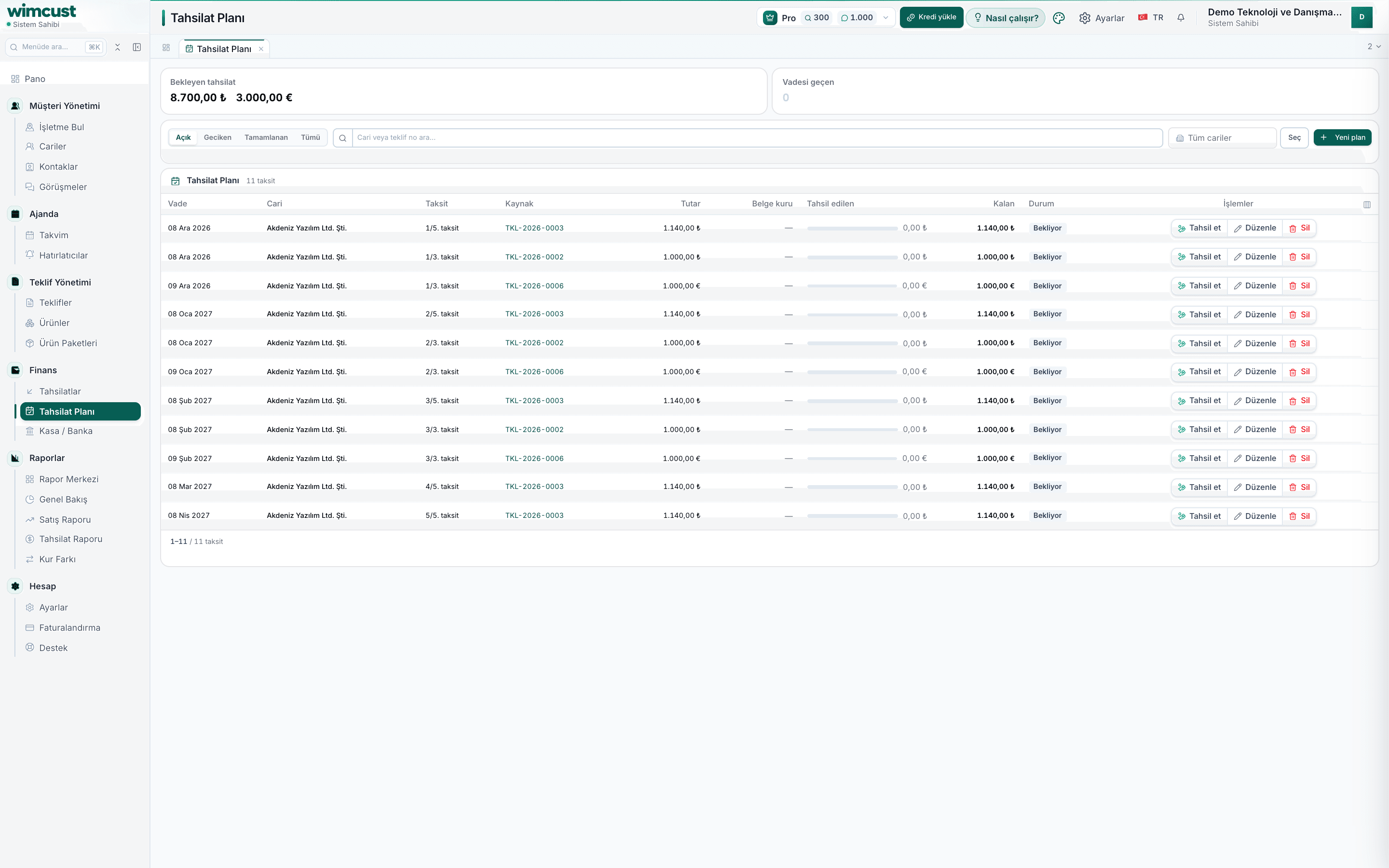
How to calculate an installment surcharge is a question almost every company that sells on credit has to answer. The gap between the cash price and the deferred price reflects the time value of money and the risk of not being paid. In Turkey this is called "vade farkı"; elsewhere it appears as a payment-term surcharge, financing fee or interest on deferred payment. This article covers the logic, common calculation methods, the tax angle and how to show it on a quote.
Important: this article is general information. How a surcharge is invoiced, booked and taxed depends on your country and the nature of the transaction. In Turkey, for example, a surcharge agreed at the time of sale is generally treated as part of the taxable amount for VAT. Check the rules in your own country and ask your accountant before applying anything.
What is an installment surcharge?
It is the extra amount a seller charges because the price is paid later or in installments instead of in cash. For the seller it covers financing cost, inflation, opportunity cost and collection risk. For the buyer it is the price of smoother cash flow. It comes in two forms:
- Agreed at the time of sale: fixed up front in the quote or contract, for example "6 installments, X% surcharge".
- Arising from late payment: charged afterwards on an overdue debt.
This article is mostly about the first kind.
How to set the rate
There is no single right way. Companies usually weigh their own financing cost (loan interest, deposit yield), expected inflation, the cost and risk of the payment method (cheque, promissory note, card fee, bank transfer), the customer's payment history and competition.
Many companies keep a surcharge schedule: fixed rates by number of installments or length of term. For example: cash 0%, 2 installments 2%, 3 installments 3.5%, 6 installments 7% (illustrative only). The schedule can also differ by payment method, since a card installment carries bank fees while a cheque carries other risks. The advantage is consistency: the same terms give the same rate to every customer and the sales team does not recalculate on every quote.
Calculation methods
1. Flat rate on the total
Apply the schedule rate once to the document total and divide the result into installments. Example: a sale of 120,000, 6 installments, 7% rate. Surcharge: 120,000 x 7% = 8,400. Deferred total: 128,400. Installment: 128,400 / 6 = 21,400. Simple and easy to explain.
2. Monthly rate
Set a monthly rate and charge each installment for the months until it is due. With 1% a month, a 20,000 installment due in month 1 carries 200 and one due in month 3 carries 600. This reflects the time value of money better but is harder to explain to a customer.
3. With a down payment
A down payment is usually left out of the surcharge; only the deferred part is charged. State clearly on the quote which amount is treated as deferred to avoid disputes.
Tax on the surcharge
In many countries a surcharge agreed at the time of sale is part of the price and therefore part of the taxable base; in Turkey it is subject to VAT. Rules and exceptions differ by country, so check your local rules and your accountant.
What about a document with mixed tax rates?
A quote can contain items at different tax rates. Example: services 80,000 at 20% (tax 16,000) and goods 20,000 at 1% (tax 200). If you add a surcharge of 5,000, which rate applies to it? Picking one rate for everything misrepresents the document. A common approach is to spread the surcharge across the lines, i.e. use a weighted rate: total tax / total base = 16,200 / 100,000 = 16.2%, so the surcharge carries 5,000 x 16.2% = 810 in tax. This equals putting 4,000 of the surcharge on the 20% line and 1,000 on the 1% line.
How to show it on a quote
- Separate line: showing the surcharge on its own line instead of burying it in item prices is transparent; the customer also sees the cash price.
- Installment table: date and amount of each installment.
- Payment method: which method the rate was set for.
- Totals must match: installments must add up exactly to the document total. Rounding differences normally go on the last installment.
Common mistakes
- Forgetting the tax on the surcharge.
- Using one tax rate on a mixed-rate document.
- Not updating the installment plan when line items change.
- Keeping the old rate after the payment method changed.
- Setting the rate by hand and differently on every quote, which is inconsistent across customers.
Charges for late payment
A charge for late payment, requested afterwards, is a different matter. It usually rests on a late-payment clause in the contract, and without one it can be disputed. Late-payment interest may also be regulated by law in your country. Write clearly in quotes and contracts what happens when a payment is late, and settle the practice with your accountant.
Card installments
With card installments the seller usually receives the full amount under terms agreed with the bank and pays a fee that depends on the number of installments. The real cost is then the bank fee rather than the delay itself, so a separate schedule for cards gives a fairer result than applying the same rate as for cheques or notes.
Explaining it to the customer
A surcharge is accepted more easily when presented as an option rather than an extra fee: "100,000 in cash, 107,000 in 6 installments." Seeing both side by side lets the customer decide by their own cash position, and negotiation moves from price to payment terms. Whatever method you choose, apply it consistently and describe it briefly in your quote terms.
Installment surcharge in WimCust
In WimCust your company defines a surcharge schedule tied to the payment method; if a method has no row of its own, the default schedule applies. On the quote form a payment plan cannot be opened until a payment method is chosen; once a plan is set, the rate is read from the schedule by the number of deferred installments and re-read if the method changes. With mixed tax rates the tax on the surcharge uses the weighted rate. When line items change, the difference goes on the last installment, and the server checks that the plan matches the document total. The plan of an approved quote passes to collection tracking. Try it free.
- #payment term surcharge
- #installment surcharge
- #credit sales
Frequently asked questions
Is tax charged on an installment surcharge?
In many countries a surcharge agreed at the time of sale is part of the taxable amount (in Turkey it is subject to VAT). Check your local rules and ask your accountant for your specific case.
How should I set the surcharge rate?
A schedule that reflects your financing cost, expected inflation, the risk of the payment method and competition keeps rates consistent.
The installments do not add up to the document total. What now?
Putting the rounding difference on the last installment is a common method. Make sure the plan is recalculated when line items change.
Read these too
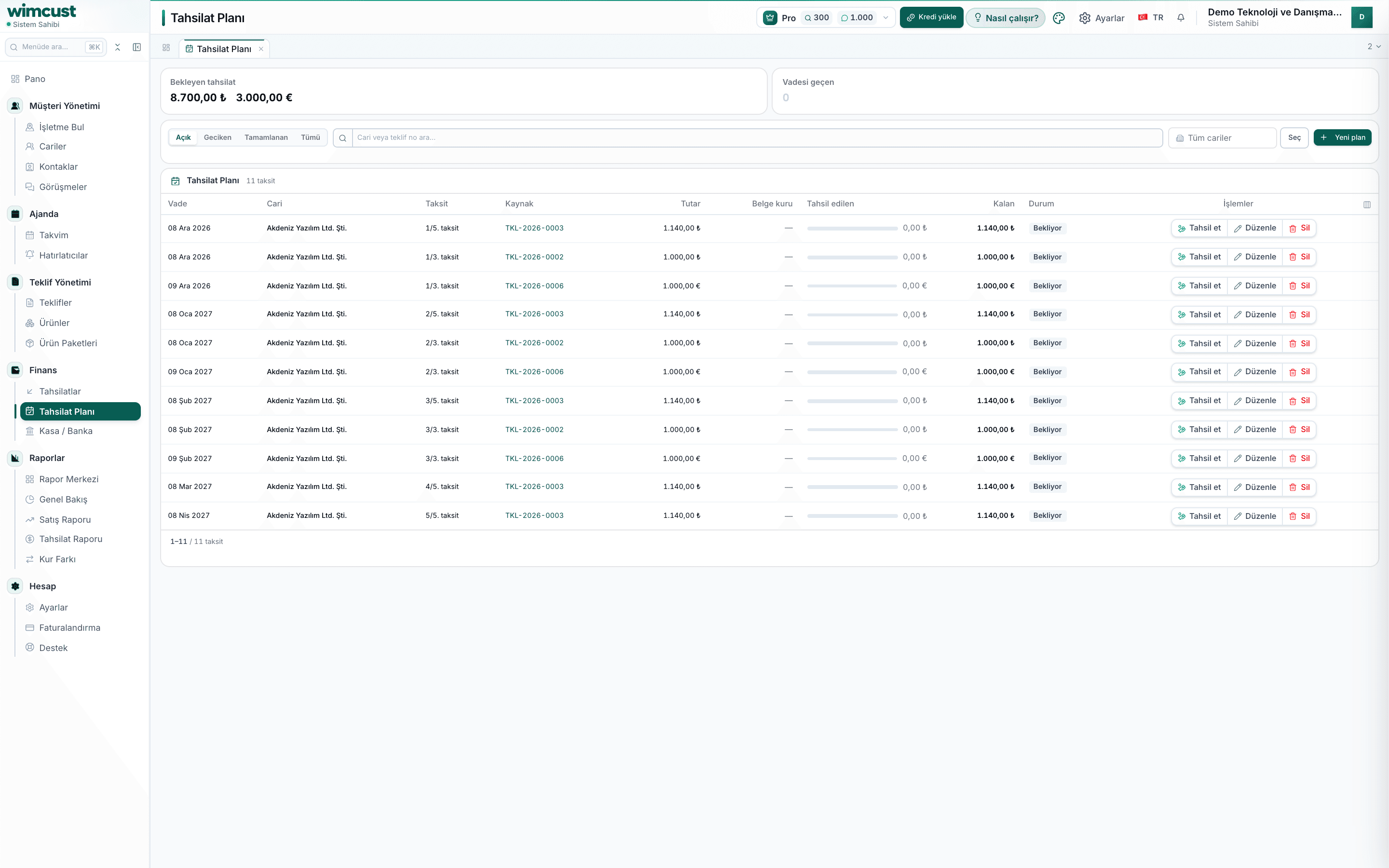
How to Track Collections: Receivables Management on Credit Terms
How to track collections: setting up a payment plan, receivables aging, due-date reminders, foreign-currency debt, exchange differences and customer statements. A practical guide.
Read the article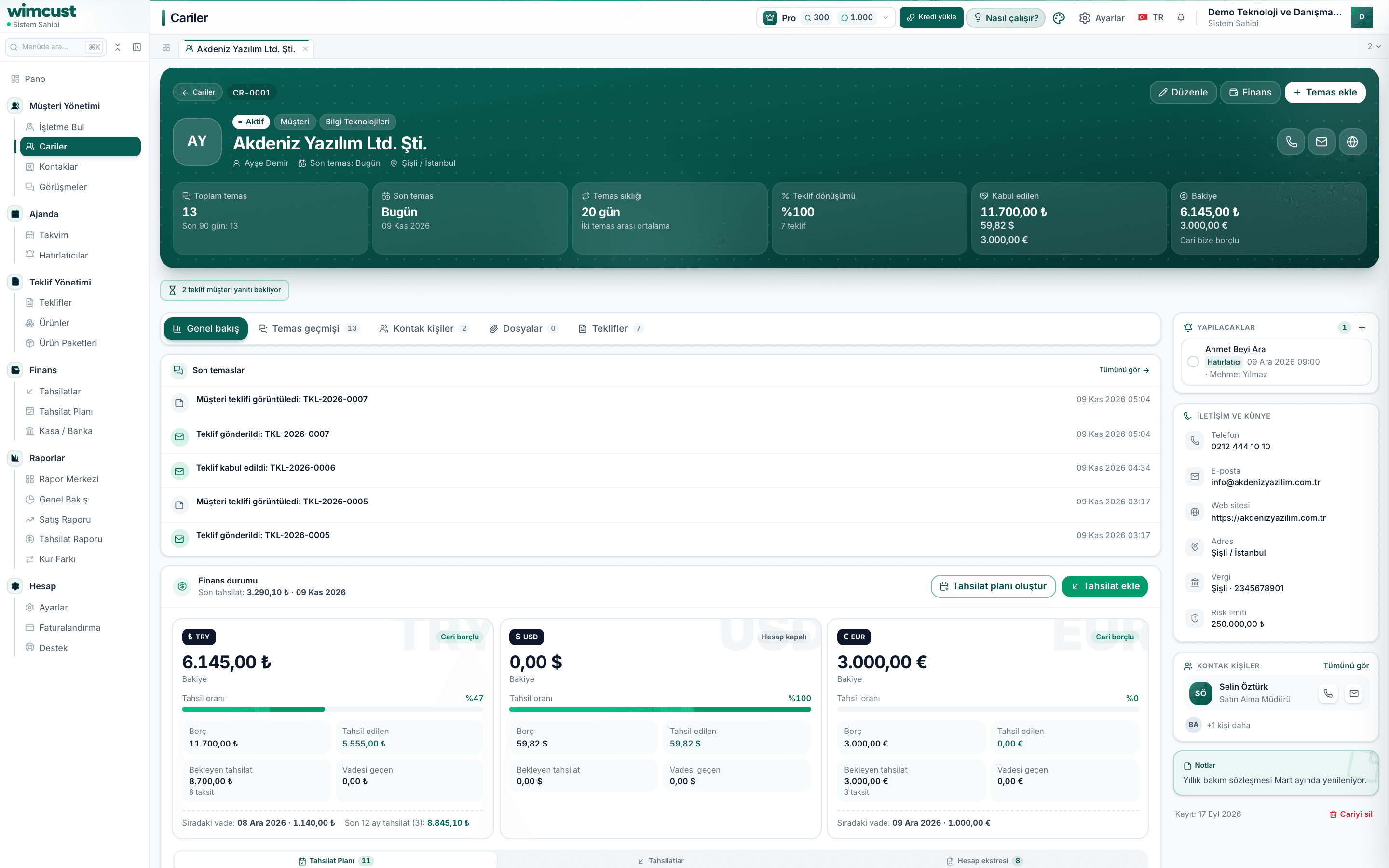
Winning Back Customers Who Have Gone Cold: A B2B Re-Engagement Guide
How to win back customers who have gone cold: spotting quiet accounts, last-contact tracking, re-engagement messages and habits that keep it from happening again.
Read the article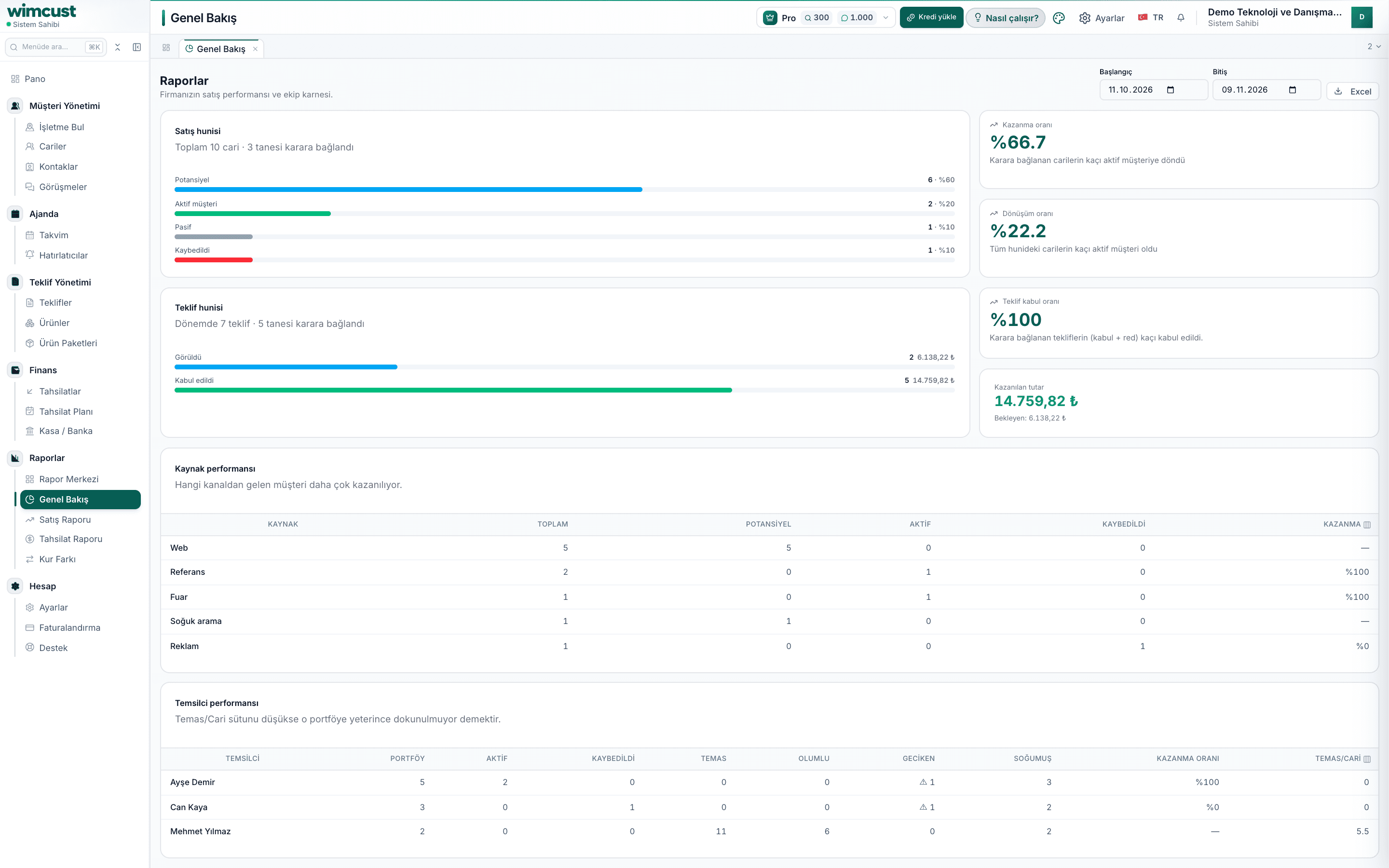
Sales Team Performance Tracking: Which Metrics to Watch
How to track sales team performance: activity, quote, conversion, revenue and collection metrics, the rep scorecard and fair measurement. A practical guide.
Read the articleSign up and find your first 60 prospects for free
Start today and find your first customer this week
The Starter plan is free forever. Open your account without a credit card and create your first customer card in minutes.