

Winning Back Customers Who Have Gone Cold: A B2B Re-Engagement Guide
How to win back customers who have gone cold: spotting quiet accounts, last-contact tracking, re-engagement messages and habits that keep it from happening again.
WimCust Team 6 min read
A cooling customer is not a lost customer, but they become one if ignored. In B2B sales, customers rarely leave suddenly one day. First orders become less frequent, phone calls are answered later, and then one day you learn they are working with your competitor. The biggest opportunity in this process is noticing the cooling early. In this article we cover the steps of noticing, understanding and re-engaging to win back customers who have gone cold.
Why do customers cool off?
The reasons customers drift away usually fall into these categories:
- A perception of indifference: the customer is tired of being called only when it is time to sell.
- A bad experience: a late delivery, an unresolved complaint, a wrong invoice.
- A competitor's offer: a better price or better terms.
- A change in needs: the customer's business has shrunk, grown or changed direction.
- A change of contact: the buyer who worked with you has left, and their replacement does not know you.
- A change of rep: the person on your side who looked after the customer has left and the portfolio has been left without an owner.
The last two reasons are especially insidious, because the relationship weakens on its own when there is no actual problem.
Noticing the cooling
Last contact date
The simplest and strongest indicator is when the last real contact with the customer took place. "Real contact" matters here: a phone call, a meeting, a visit or an email exchange. An internal note you write to yourself or a meeting planned for a future date is not yet contact; counting them creates the illusion that you are talking to the customer.
Set a threshold
The answer to "how long a silence is normal?" differs for each customer. For a customer who orders monthly, 45 days of silence is a warning sign; for a customer who buys once a year, it is not. You can start with a general threshold (for example 60 or 90 days) and adjust it over time by customer group.
A regular list
Once a month, pull the list of accounts that have passed the threshold and review each rep's own list with them. This list is a far more productive calling list than cold calling: the person on the other end knows you.
Understanding the reason
Before you reach out again, look at the customer's history:
- What was discussed in the last conversation? Is there an open issue?
- What happened to the last quote? If it was rejected, why?
- Is there an open complaint or a late payment?
- Is the contact still the same person?
If this information is in the conversation records, the person calling can come back to the customer with a concrete topic instead of a generic question like "how are you, do you need anything?"
Re-engaging: what should you say?
Writing to a cooled customer with "we haven't spoken for a long time, do you need anything?" is honest but ineffective. More effective approaches:
- Bring value: "The periodic maintenance for the equipment you bought last year is coming up; would you like us to schedule an appointment?"
- Mention something new: "We have added a new option to the product group you were interested in; shall I send a short overview?"
- Ask for feedback: "We have missed working with you. Was there anything about our service you would like us to improve?" This question brings a bad experience to the surface if there was one.
- If the contact has changed, introduce yourself: "We have worked with your company for a long time, and as the new person in charge we would like to meet you too."
Keep the message short and personal, and ask a single question. Choose the channel according to the customer's habit: call a customer who prefers the phone, message a customer who writes on WhatsApp.
If there was a bad experience
If the cause of the cooling is a mistake, acknowledge it first. Instead of getting defensive, saying "we apologize for the delay at that time, and here is what we have changed" is the fastest way to rebuild the relationship. Back the solution with a concrete step: priority delivery, special terms on the next order or the contact details of a directly responsible person.
The customer who does not come back
Not every cooled customer can be won back, and that is normal. For a customer who clearly says they are not interested, or who has made a long-term agreement with another supplier, record the situation, note the reason and set a reminder to reassess after a reasonable time (for example six months or a year). Reviewing the reasons for lost customers as a whole is the best way to prevent future losses.
Preventing cooling
- Make contact outside of sales too: a satisfaction call after delivery, an account review meeting once a year.
- Give every customer an owner: when a rep leaves, hand over their portfolio to someone else immediately.
- Keep contacts up to date: build relationships with more than one person at the company; a relationship tied to one person breaks when that person leaves.
- Date your follow-ups: at the end of every conversation, record the next step and its date.
- A regular list: make looking at the cooling-accounts list every month a habit.
Measuring win-back
To see which approach works, track the accounts you re-engaged: how many were reached, how many resulted in a conversation, how many produced a new quote request? After a few months these numbers show you which message, which channel and which customer group responded most.
Example: a spare parts supplier
A spare parts supplier sets a 45-day silence threshold for customers who place at least one order a month. At the start of the month, 18 accounts that have passed the threshold are listed. Reps look at each account's last conversation note and last quote. In three accounts there is an open complaint, in five the contact has changed, and in the rest no clear reason is found. Those with complaints are called by the sales manager, introduction visits are planned for those whose contact has changed, and the others get a short message with a maintenance-season reminder. Every contact is recorded and a follow-up reminder is set for two weeks later. At the end of the month, which approach got more responses is read from the conversation records.
Protecting a customer you have won back
A customer who places an order again is in a period when the relationship is still fragile. Follow the first delivery with extra care, make a short satisfaction call after delivery and record the next contact date right away. Also note the reason the customer came back; it is a valuable hint for testing whether the same reason might work for other cooled customers.
Cooling customers in WimCust
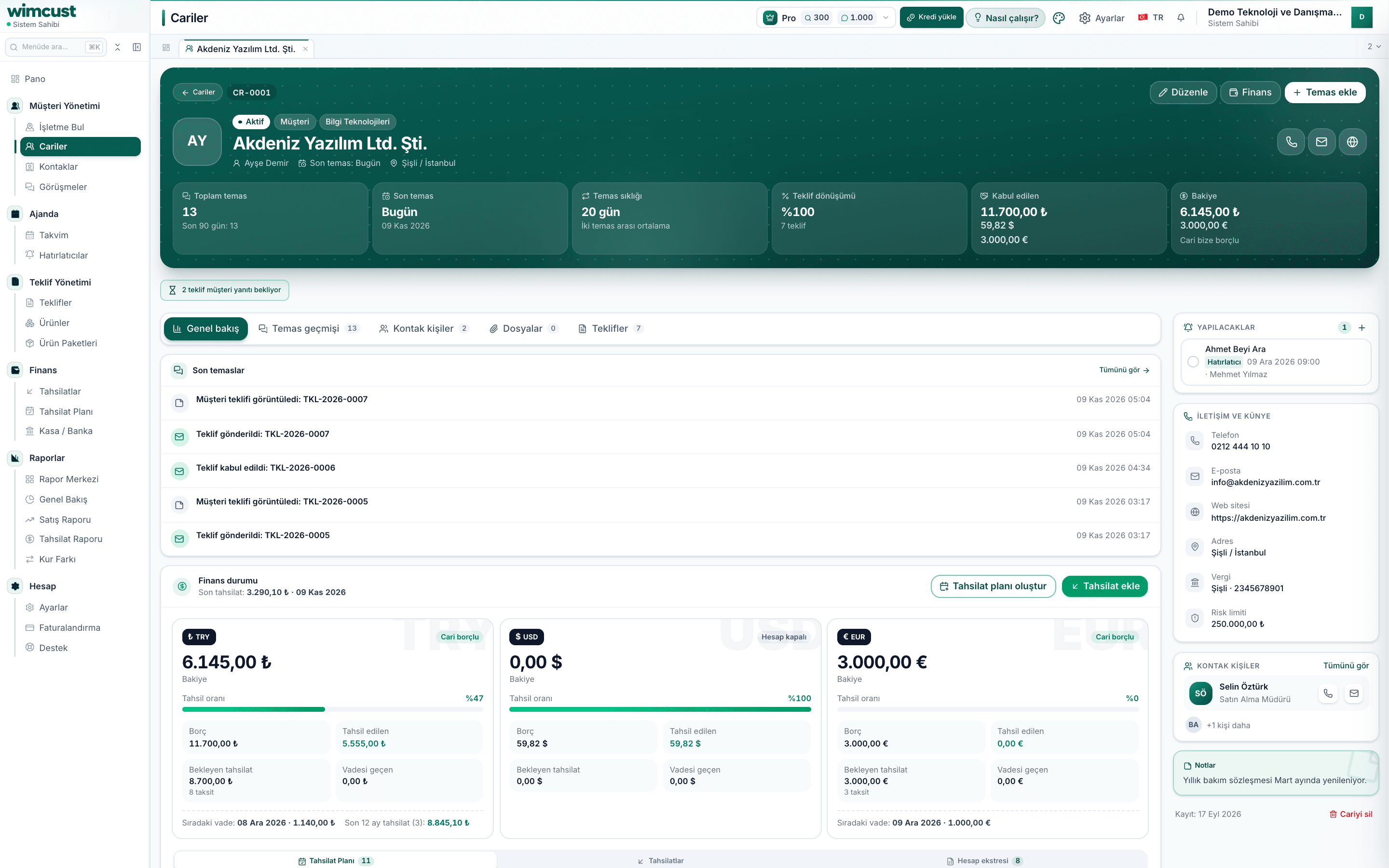
In WimCust, each account's last contact date is calculated automatically from conversation records; note-type entries and future-dated plans do not count as contact. Accounts with no contact for a long time are listed on the dashboard as "cooling". In conversation tracking, past conversations and quotes stay on the account's record; for re-engagement, a calendar reminder is set. The portfolio of a departing rep is handed over with bulk assignment; a rep who has a portfolio cannot be deleted, so no account is left without an owner. You can reach customers by WhatsApp from your company's own number. Try it for free or see the customer tracking page.
- #customer churn
- #customer loyalty
- #re-engagement
Frequently asked questions
When is a customer considered cold?
It depends on purchase frequency. A practical approach is to start with a general threshold (for example 60-90 days without contact) and adjust it by customer group.
Should internal notes count as last contact?
No. If you have not actually talked to the customer, an internal note or a future-dated plan should not count as contact; otherwise you get the illusion of being in touch.
What should I write in the first message to a cold customer?
A short, personal message with something concrete (a maintenance date, a new product, an open issue) or a request for feedback works better than a generic check-in.
Read these too
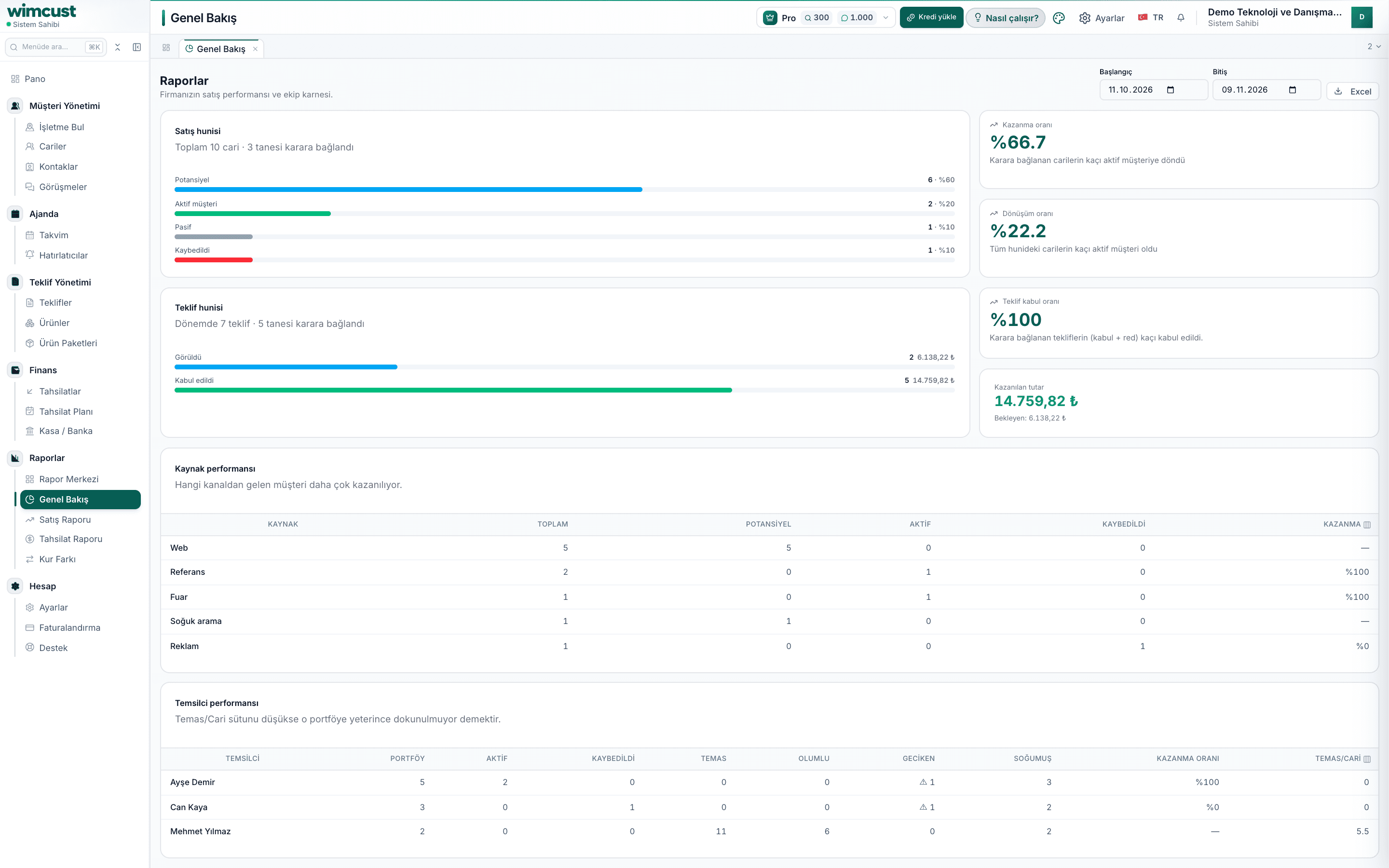
Sales Team Performance Tracking: Which Metrics to Watch
How to track sales team performance: activity, quote, conversion, revenue and collection metrics, the rep scorecard and fair measurement. A practical guide.
Read the article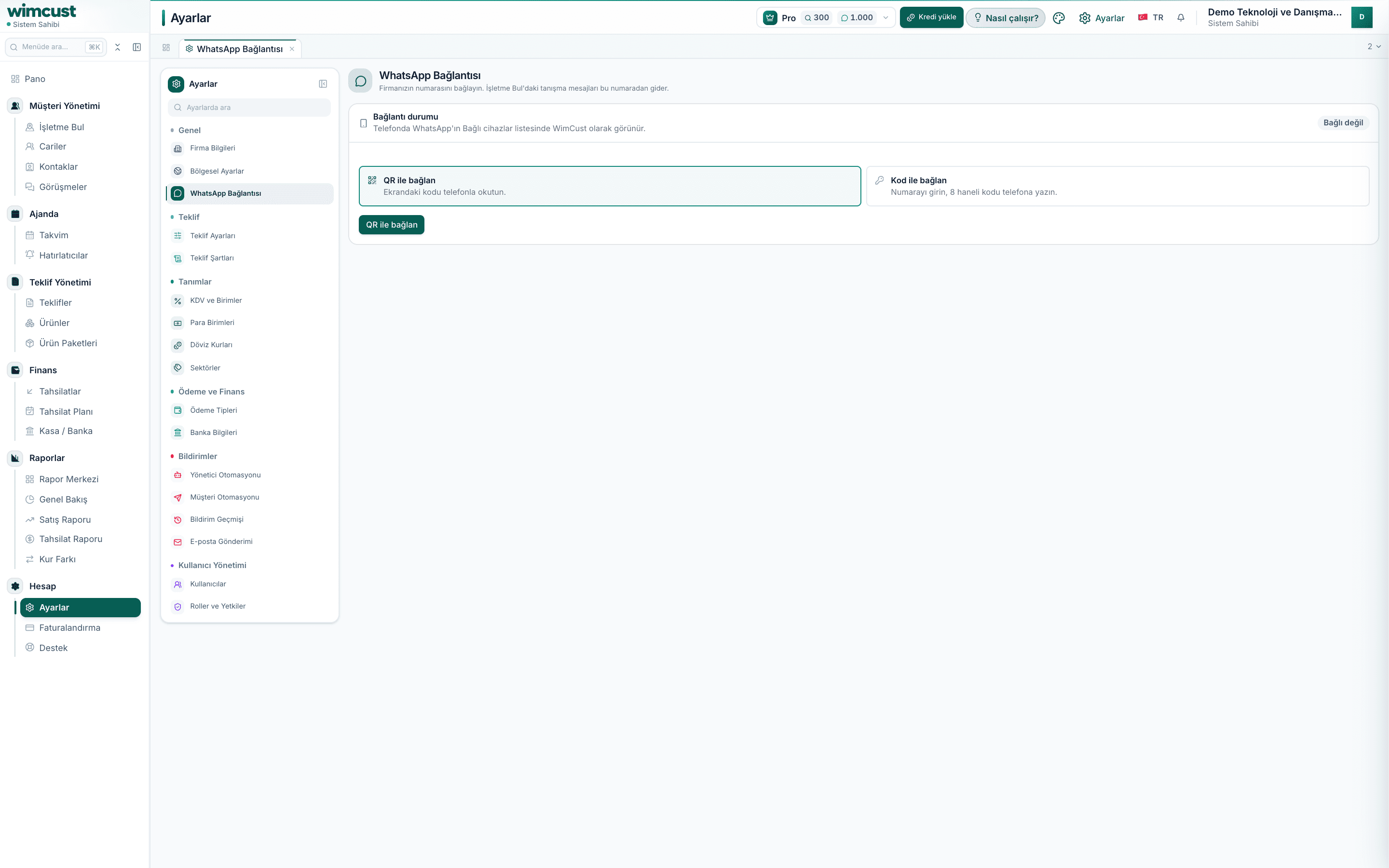
WhatsApp Customer Communication and GDPR: What to Watch
WhatsApp customer communication and data protection: general principles on GDPR, consent, transparency, opt-out, record keeping and good practice for B2B sales teams.
Read the article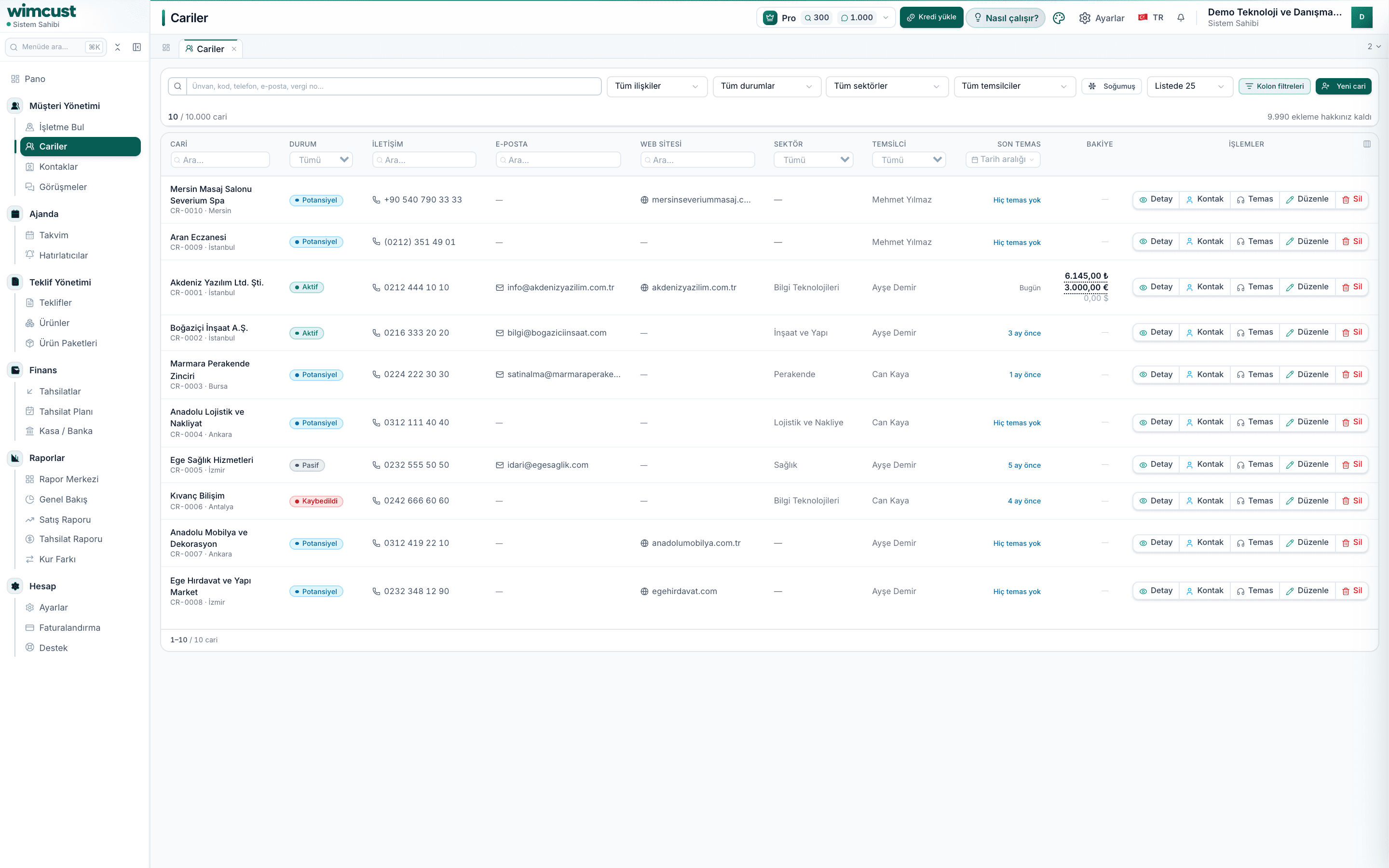
Moving from Excel to a CRM: A Step-by-Step Guide Without Losing Data
How to move from Excel to a CRM: data cleaning, column mapping, deduplication, import preview, portfolio assignment and getting the team on board. A step-by-step guide.
Read the articleSign up and find your first 60 prospects for free
Start today and find your first customer this week
The Starter plan is free forever. Open your account without a credit card and create your first customer card in minutes.