

How to Write an Effective Quote: A B2B Sales Quote Guide
How to write an effective quote: structure of a B2B sales quote, pricing, discounts, taxes, terms, validity period and follow-up after sending. A practical guide.
WimCust Team 6 min read
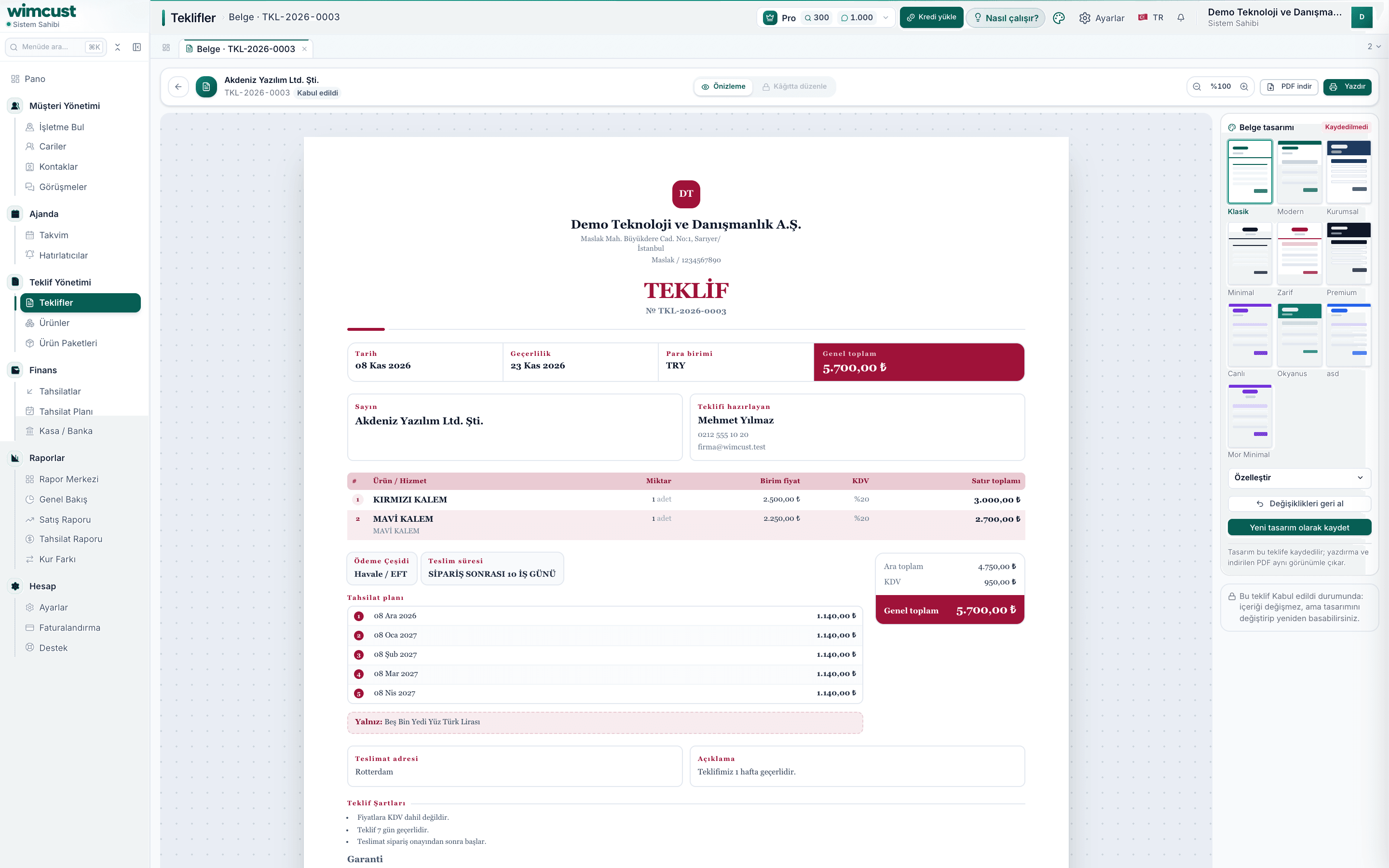
The question of how to write an effective quote is about the most concrete moment of the sale. After weeks of conversations, when the customer says "send me a quote," the document you send starts to speak for you. The customer often reads the quote when you are not there, side by side with other quotes. So a good quote carries not only the right price but also clarity, trust and ease of decision. In this guide we cover the elements of a B2B sales quote and the common mistakes.
Before writing the quote: clarify the need
The best quote repeats the customer's need in the customer's own words. Before writing, make sure you know:
- What problem does the customer want to solve?
- Who makes the decision, and who will read the quote?
- What is the budget range and payment preference (upfront, on credit terms, in installments)?
- Is there an expectation for a delivery or start date?
- Are there competing quotes?
If this information is scattered across your conversation records, it will be missing at the quoting stage. Logging conversations on the customer's record is the easiest way to keep this information in front of you while writing the quote.
The structure of a good quote
1. Header and introduction
Quote number, date, validity period, and the customer's and your company details. Your logo, address, phone and tax details should be complete; the customer should see from the document who they are dealing with.
2. A short description
Summarize what the quote covers in two or three sentences, such as "Below is our annual maintenance contract and spare parts quote for the production line maintenance you described in our meeting." This description is the part the customer sees; do not put your internal notes, cost calculations or information like "we can go 5% lower in negotiation" here.
3. Line items
Each item should appear with a clear name, quantity, unit, unit price and tax rate. Single-line lumped items such as "materials and labor" make the customer suspicious; they want to see what costs how much. Preparing frequently sold products together as bundles saves time and ensures consistency.
4. Discounts
Make the discount visible. When the customer sees the list price and the discount separately, they perceive the value they are getting better. A discount applied to the whole document should be distributed proportionally across the lines if items have different tax rates; otherwise the tax amount is calculated wrongly.
5. Taxes and withholdings
Sales tax or VAT should be calculated per line and shown by rate in the totals. Depending on your country, some transactions involve withholding taxes (for example, the withholding mechanisms used in Turkey), and showing these correctly on the quote prevents friction later with the customer's accounting. We cover one such mechanism in what is withholding tax and how to show it on a quote. Tax rules change; check current regulations and your accountant.
6. Currency and exchange rate
If you have items priced in foreign currency, state clearly which rate is used and which currency the document is in. A phrase such as "the central bank's selling rate on the invoice date" prevents disputes later.
7. Payment plan
If you sell on credit or in installments, show the installments with dates and amounts. If you apply a finance charge, how it is calculated should be clear. See how to calculate a deferred-payment charge.
8. Terms
Delivery time, warranty, installation, shipping, returns and payment terms. Instead of rewriting these texts from scratch every time, store them as templates; but make sure the template is copied into the quote, so that a quote that has already been sent stays the same even if the template changes later.
9. Validity period and the next step
State until when the quote is valid and how the customer will approve. A single, clear action such as "click this link to approve" gets a faster result than "reply by email."
Common mistakes
- Calculation errors: a formula that has drifted in a spreadsheet template, wrong rounding or a discount subtracted from the total. If the customer notices the error, trust is shaken; if they do not, you lose money.
- Vague scope: if what is included and excluded is not written down, a dispute arises during the work.
- A long, complicated document: the decision maker often looks only at the first page and the total.
- Sending without follow-up: staying silent for a week after sending a quote leaves room for a competitor.
- Version confusion: three different versions of the same quote circulating. When a change is needed, send a new version with a revision number and invalidate the old one.
After sending
The sale does not end when the quote is sent; a new stage begins. Knowing whether the customer opened the quote, following up before the validity period expires and answering objections quickly determine your conversion rate. We cover this stage in quote follow-up and conversion rate.
Approval: a trail tied to the document
It is not always clear from a "OK, go ahead" email which document was approved. Having the customer approve the quote on the document itself by typing their name, and recording that approval with date, IP and device information, makes your life easier in any later dispute.
How should you present the price?
The price is the most-read line of the quote, but it means nothing by itself. The customer needs to know what to compare it with. A few practical tips:
- Offer options: if possible, prepare two or three levels (basic, recommended, comprehensive). The customer starts thinking "which one should I take?" instead of "should I buy?"
- Put the value close by: directly under an important item, add the benefit it gives the customer in one sentence.
- Show the total clearly: subtotal, discount, tax, any withholdings and grand total should be on separate lines. The customer's accountant will read this document too.
- Round consistently: rounding to two decimals per line and calculating the document total from the rounded lines makes the total match the items exactly.
Appearance is also a message
A tidy document in your company's colors with no typos signals professionalism. Small flaws such as accented characters breaking in the PDF stand out. Before sending, read the document once from start to finish in print preview.
The importance of quote speed
In B2B sales the customer usually asks several companies for quotes, and the first quote to arrive becomes the anchor for the comparison. Sending a quote the same day is often not possible, but sending it within hours instead of days is. For that, keep your product catalog up to date, prepare frequently used item groups as bundles and turn your terms into a template.
Writing quotes with WimCust
WimCust's quote management includes the whole structure above: adding items and bundles from the catalog, line and document discounts (a document discount is distributed proportionally across lines), VAT, withholding taxes where they apply, per-line currency with central bank or ECB rates depending on your country, a payment plan with a finance-charge schedule, terms templates and an internal note that is hidden from the customer. The document design is adjusted to your company. The quote goes out as a PIN-protected e-Quote link; the customer approves from the link, and the approval is recorded with name, IP and device information. Start for free or see the quoting software page.
- #writing quotes
- #sales quote
- #price quote
Frequently asked questions
What must a quote include?
Quote number and date, validity period, details of both parties, line items (quantity, unit price, tax rate), discount, tax totals, payment terms, delivery and warranty terms, and the approval method.
How long should a quote be valid?
It depends on the industry and price volatility. Shorter periods are preferred for items priced in foreign currency or with volatile raw material costs, and longer ones for fixed-price services.
Should I send the quote as a PDF or as a link?
A PDF is handy for archiving. A link lets you see whether the customer opened the quote and take approval directly on the document. You can offer both together.
Read these too
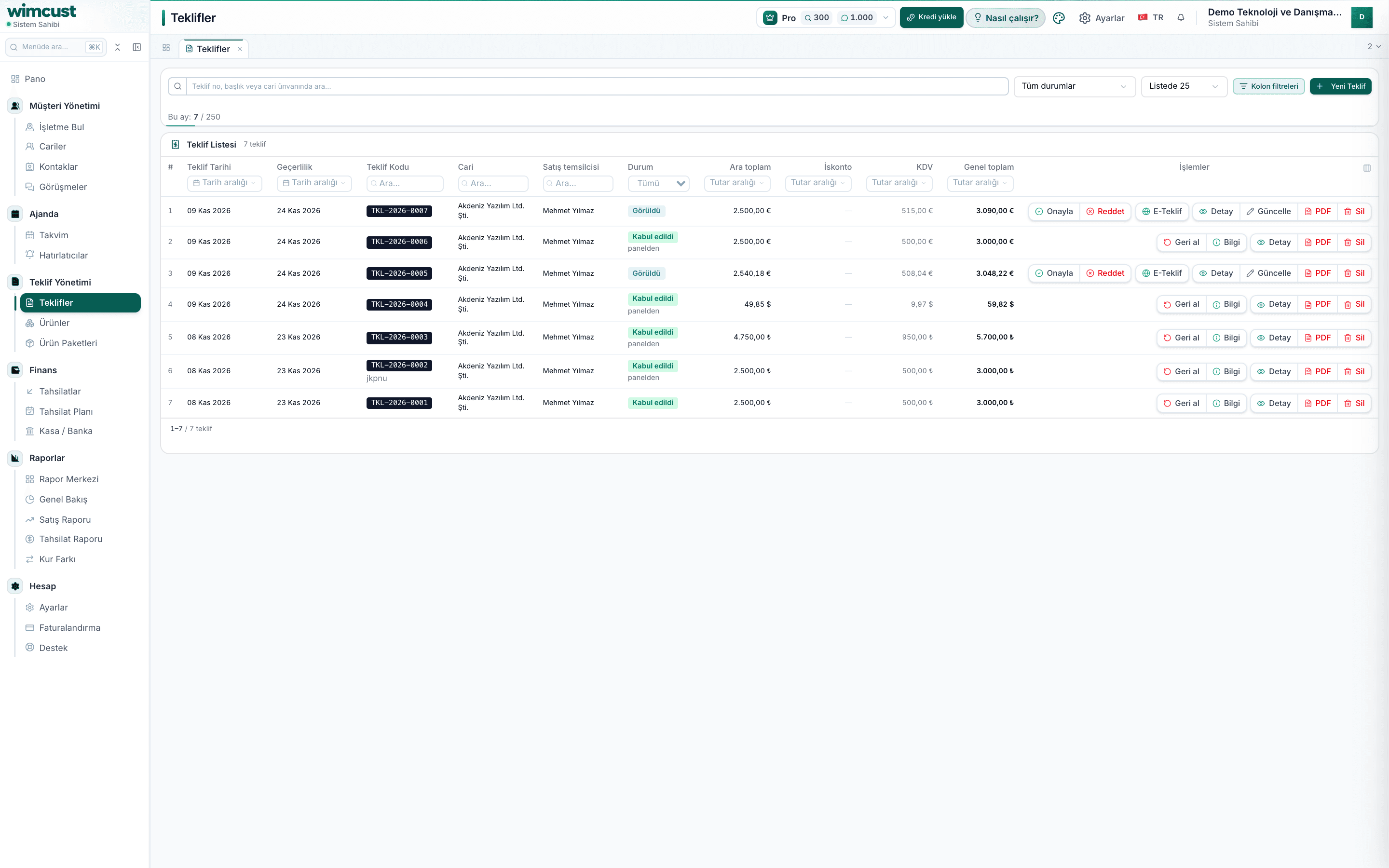
Quote Follow-Up and Conversion Rate: Turning Quotes into Sales
How to follow up on quotes and calculate quote conversion rate: follow-up rhythm, open tracking, validity period, rejection reasons and reporting. A practical guide.
Read the article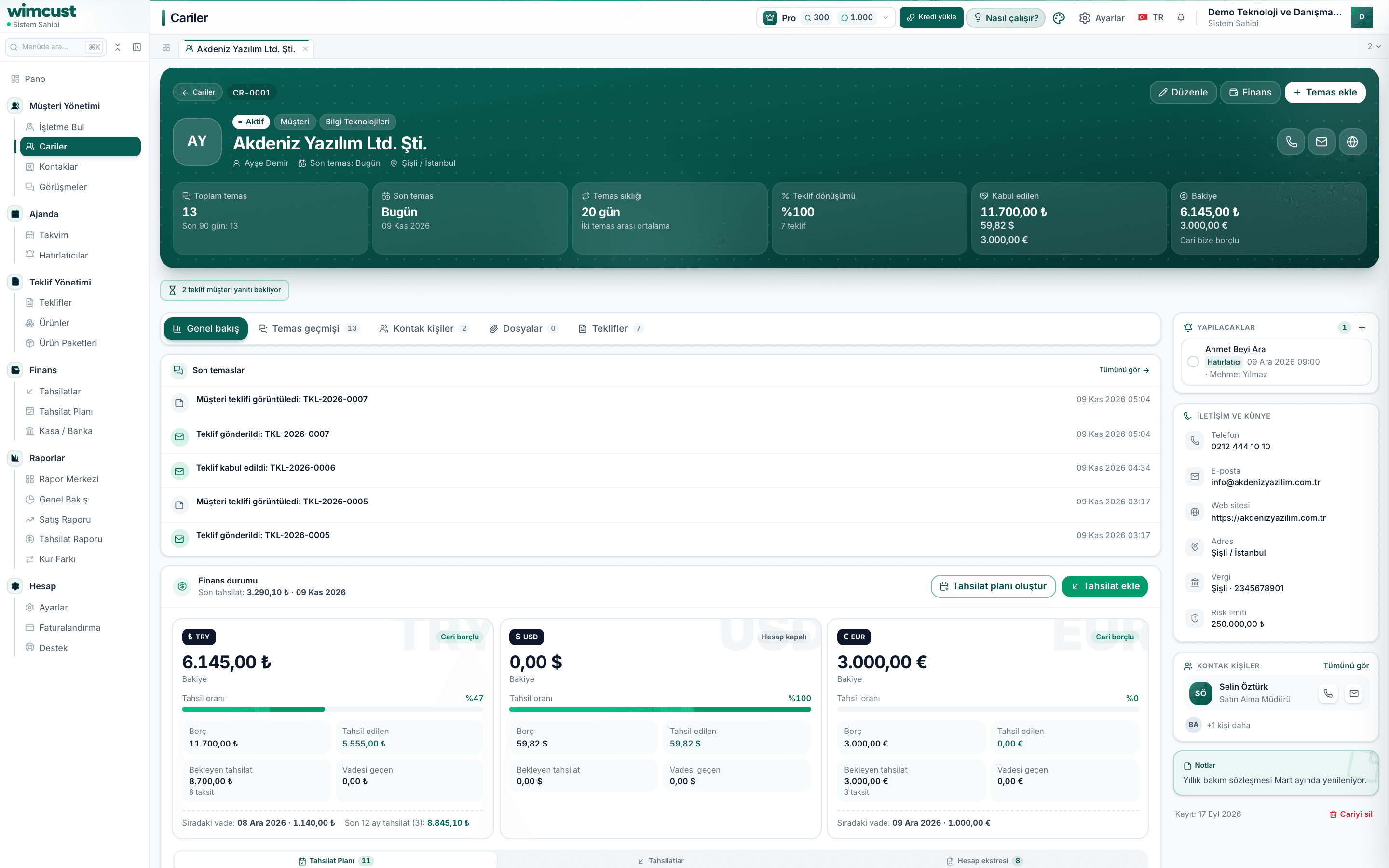
Winning Back Customers Who Have Gone Cold: A B2B Re-Engagement Guide
How to win back customers who have gone cold: spotting quiet accounts, last-contact tracking, re-engagement messages and habits that keep it from happening again.
Read the article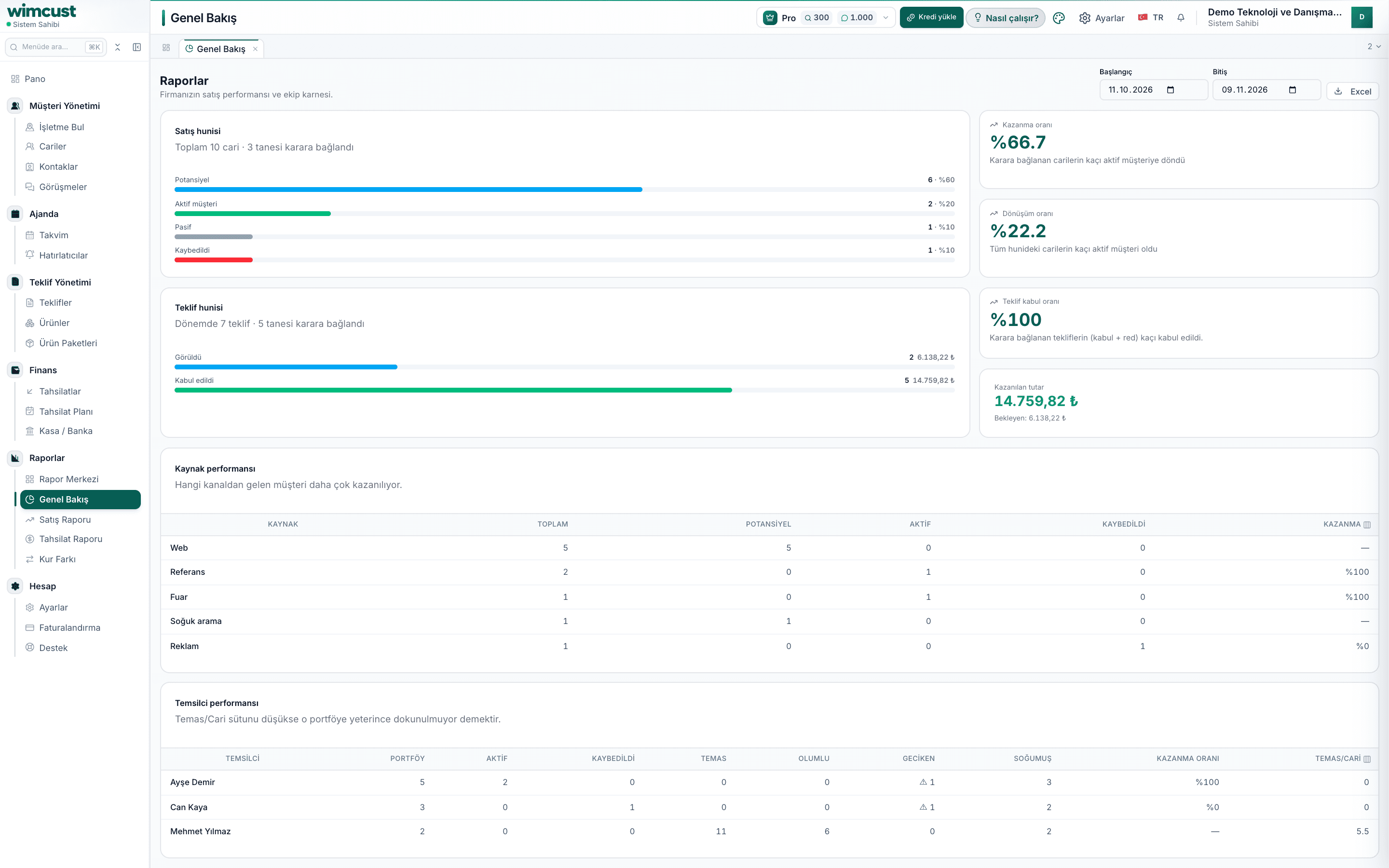
Sales Team Performance Tracking: Which Metrics to Watch
How to track sales team performance: activity, quote, conversion, revenue and collection metrics, the rep scorecard and fair measurement. A practical guide.
Read the articleSign up and find your first 60 prospects for free
Start today and find your first customer this week
The Starter plan is free forever. Open your account without a credit card and create your first customer card in minutes.